Samantha High's Portfolio

Throughout my academic journey, spanning from my Honors Bachelor of Science in Biology (2009) to my doctoral research and Doctor of Philosophy in Biology (2016) to now completing a second Bachelor of Science, this time in computer science, I have constantly pursued opportunities to expand my knowledge and skills in various disciplines. While my initial focus was in the field of Biology, my passion for technology and problem-solving led me to explore additional avenues in computer science.
During my undergraduate studies in biology, I embarked on a self-directed learning path, delving into the world of Python programming. This endeavor allowed me to enhance my programming skills and gain proficiency in Python. As part of my thesis project, "The Numerical Effects of Timing Systems," I delved into the world of UX and UI design and leveraged my newfound expertise to ensure a seamless user experience and experimental design.
As a doctoral researcher, I collaborated with our esteemed bioinformatician and other colleagues, contributing to the analysis of complex experimental data sets and genome analysis. In particular, we utilized R, specifically the G-test of genotypes, to investigate and draw meaningful insights from the intricate genetic information we had gathered. This experience sharpened my analytical abilities and solidified my expertise in leveraging statistical methodologies for biological research.
In my pursuit of a well-rounded skill set, I also undertook the Intro to Programming Nanodegree at Udacity (2019). This intensive program provided me with a comprehensive foundation in computer science principles, equipping me with the fundamental knowledge and problem-solving techniques that underpin successful software development.
After completing my Udacity Nanodegree I decided to pursue a formal Bachelor of Science degree in Computer Science at Oregon State University (OSU). During my time at OSU, I had the privilege of working on a wide range of projects that have enriched my skills and provided valuable hands-on experience.
Now, as I transition into the realm of software engineering, my diverse background in both biology and computer science positions me uniquely to tackle complex challenges and approach problem-solving from a multidisciplinary perspective. The amalgamation of my skills in programming, statistical analysis, and user-centered design enables me to deliver innovative and impactful solutions. What follows is a selection of projects that demonstrate my capabilities and growth across various domains. While specific project solutions are confidential, I am excited to share the valuable experiences and insights gained along this transformative journey.
Exploring the World of Computer Science
In my Introduction to Computer Science courses, I delved into the realm of Python, immersing myself in exciting projects that included developing text-based games. These projects allowed me to strengthen my programming skills while honing my ability to create engaging and interactive experiences.Web-Based Applications: Powering User Experiences
As my academic journey progressed, I had the opportunity to work on web-based applications using a diverse set of technologies. With JavaScript, NodeJS, ReactJS, HTML, and CSS at my disposal, I embarked on projects that pushed the boundaries of what could be achieved in the digital landscape. Through these endeavors, I learned how to build intuitive user interfaces, leverage powerful frameworks, and deliver seamless web experiences.Empowering Businesses with Database Solutions
One standout project from my time at Oregon State University was undertaken during my Introduction to Databases course. Collaborating with a partner, we developed a comprehensive application that empowered a fictional store to effectively track their inventory and transactions. This undertaking involved meticulous project planning, creating an Entity-Relationship Diagram (ERD) schema, implementing CRUD functionality, and populating the database with sample data. The culmination of this effort can be found in the final report, accessible through this link: Moogle Marketplace Sales & Inventory Database Portfolio Project.Exploring the Depths of Computer Architecture
One of my most memorable courses at OSU was Computer Architectures and Assembly Language, which provided an immersive learning experience in x86 assembly language. Through various assignments, I delved into the intricacies of this low-level programming language, implementing Macros, working with different data types and structures, and mastering the art of passing parameters on the stack. This course equipped me with a profound understanding of computer architecture and the skills to optimize code at its fundamental level.Operating Systems and Linux Mastery
In the Operating Systems course, I further honed my programming skills through hands-on experience with C and continued to deepen my knowledge of Linux. As an avid Linux user for over two decades, I entered the course well-prepared. I engaged in a range of projects that showcased my expertise, including writing a Base64 encoder, developing a custom shell in C, creating a program to list files and directories in a tree format, and implementing encryption and decryption algorithms. Additionally, I delved into multi-threading, synchronization, and mutual exclusion concepts, solidifying my understanding of concurrent programming.Crafting User-Centric Applications
In the Introduction to Usability Engineering course, I collaborated with a dynamic team to develop a novel application that prioritized user-friendliness and seamless interactions. Leveraging Figma, we meticulously designed and refined our application, incorporating valuable feedback from our peers throughout the development lifecycle. Our dedication to usability engineering resulted in a remarkable product that truly resonated with users. For an in-depth look at our process and outcomes, please refer to the final report linked here: SwapMeep.Building a Portfolio Website
After successfully completing various web development projects during my time at OSU, I took the initiative to design and develop my own professional website, which incorporates a blog format and serves as a centralized hub for my portfolio, CV, and other relevant career materials. Utilizing Next.js, Vercel, and Tailwind CSS, I effectively leveraged the blog-starter-template as a foundation, making substantial enhancements to improve the user experience and even creating a dedicated page specifically for showcasing this portfolio. To gain insight into my coding practices and explore the underlying implementation, you can access my code repository here.Expanding the Boundaries of Performance
In my parallel programming course, I embarked on a journey of exploring the realms of parallel computing and harnessing its immense potential. This experience allowed me to delve into various facets of parallel programming and expand my skill set in this critical domain. Throughout the course, I engaged in a series of projects centered around testing simulations across a range of threads/cores, both on CPUs and GPUs. This hands-on approach enabled me to gain practical experience and proficiency in utilizing cutting-edge technologies and frameworks such as OpenMP, SIMD, CUDA, OpenCL, and MPI. One of the key lessons I learned during my exploration of parallel programming was the art of optimizing performance. By thoroughly analyzing the problem at hand, I acquired the ability to assess whether adding more cores or threads would genuinely lead to a significant increase in computational efficiency. This crucial skill ensures that resources are effectively allocated, resulting in streamlined and optimized solutions. My journey in parallel programming has not only equipped me with the technical prowess to tackle complex computational challenges but also instilled in me a deep appreciation for the importance of efficiency and scalability in software development. Through this immersive experience, I have developed a keen eye for identifying opportunities to leverage parallel processing to achieve remarkable performance gains.Unleashing Creativity in Computer Graphics
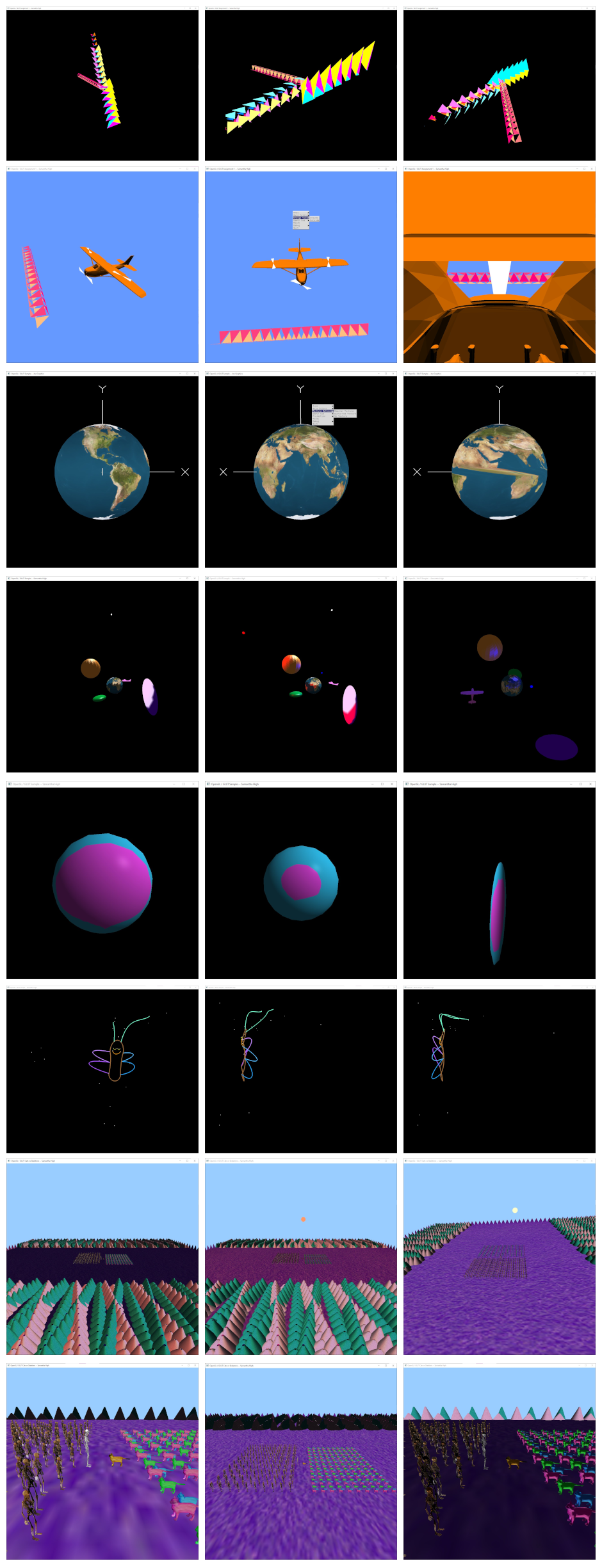
My Introduction to Computer Graphics course served as a platform for further advancing my C and C++ programming skills while exploring the power of OpenGL. Throughout the course, I immersed myself in the creation of 3D objects and scenes, animating captivating visual narratives, and mastering texture mapping, lighting, shaders, and geometric modeling. The result was a collection of awe-inspiring projects that brought my creative visions to life, as seen below.